


GRADES 3–8 MATH INTERVENTION | LEARNING-GAP RECOVERY & PREREQUISITE SKILLS
Stop guessing what to reteach.
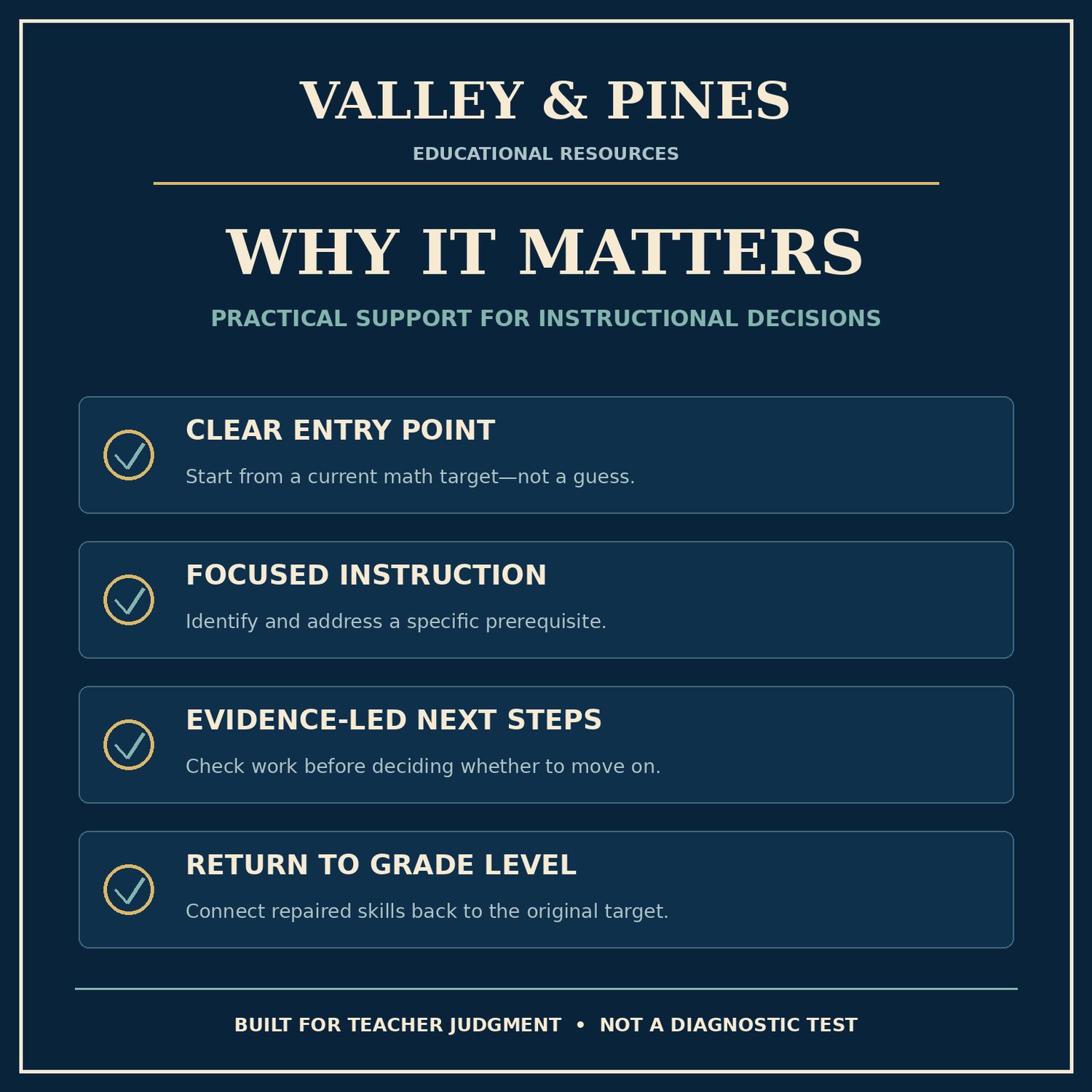
This Grades 3–8 Math Intervention system helps teachers quickly identify the prerequisite skill that is blocking a student’s grade-level work, verify the gap, teach the missing skill, repair it, and return the student to the original target.
Built around 127 intervention nodes across 9 math domains, the system gives classroom teachers, interventionists, resource teachers, MTSS/RTI teams, and math coaches a structured path from “they’re stuck” to “here’s exactly what I teach next.”
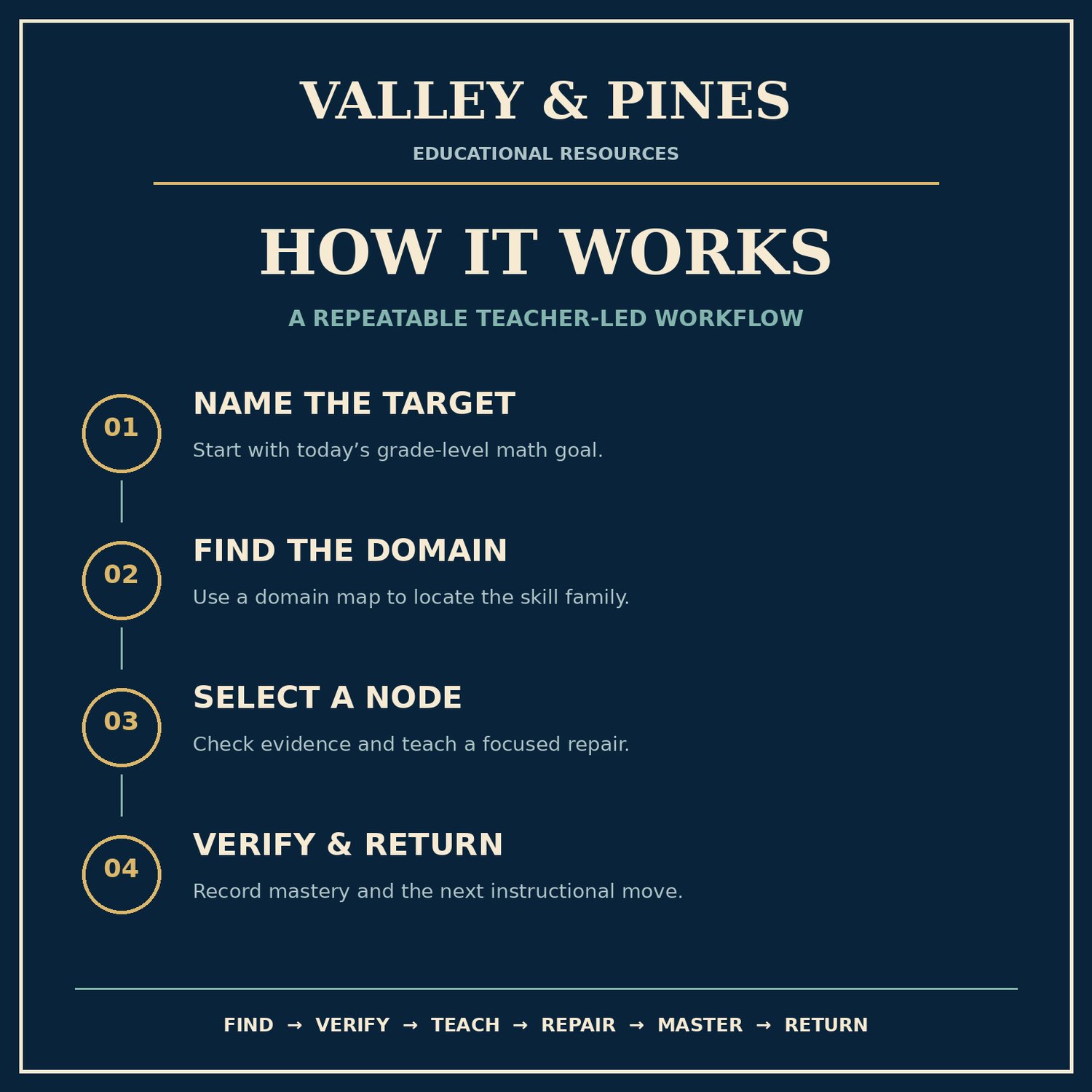
Use the sequence TODAY’S TARGET → FIND THE BREAK → VERIFY → TEACH TODAY → REPAIR → MASTER + RETURN → NEXT MOVE to turn learning gaps into a clear, actionable intervention plan.
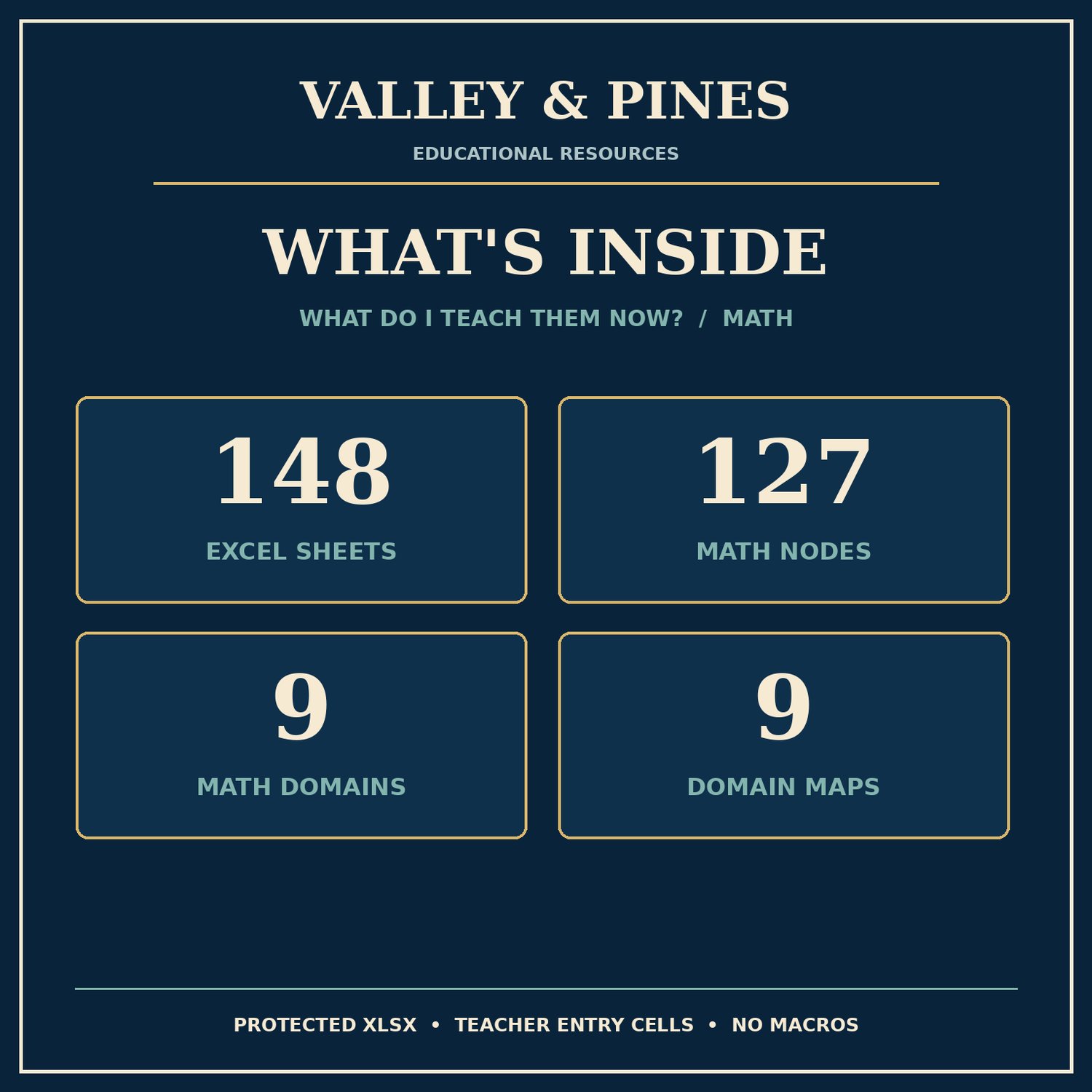
This Microsoft Excel system includes 148 workbook sheets, 127 instructional math nodes, and 9 major math domains—giving classroom teachers, math interventionists, special education/resource teachers, MTSS/RTI teams, math specialists, and instructional coaches a practical framework for responding when a student is not yet ready for the skill being taught.
Use it for individual students, small-group math intervention, targeted skill repair, progress support, and planning the next instructional move.
This is instructional support—not a diagnostic assessment.
WHAT’S INCLUDED
This is a comprehensive Microsoft Excel math intervention system—not a worksheet pack.
You receive:
• 148 workbook sheets
• 127 instructional math nodes
• 9 major math domains
• Guided math intervention workflows
• Teacher decision-support tools
• Prerequisite-skill verification steps
• Focused intervention sequences
• Mastery and return-to-grade-level checks
• Teacher recording and next-move tools
The system is designed to help teachers move from “This student is struggling” to a specific instructional response without reteaching everything or guessing at the underlying gap.
9 MATH DOMAINS
The 127-node instructional library spans:
1. Foundations — 10 nodes
2. Whole Numbers — 12 nodes
3. Multiplication & Division — 16 nodes
4. Fractions — 17 nodes
5. Decimals — 14 nodes
6. Ratios & Proportional Reasoning
7. Expressions & Equations
8. Geometry & Measurement
9. Data, Statistics & Probability
HOW THE SYSTEM WORKS
1. START WITH THE CURRENT MATH TARGET
Identify what the student is expected to do in today’s grade-level lesson.
2. FIND THE LIKELY BREAK
Use the system to narrow the difficulty to the appropriate math domain and prerequisite skill family.
3. VERIFY BEFORE REPAIRING
The workbook is designed to prevent teachers from automatically assigning an intervention based on one mistake.
Collect evidence, check the suspected prerequisite, and use uncertainty pathways when the pattern is unclear.
4. TEACH TODAY
Use temporary instructional support so the student can continue participating in current grade-level mathematics while the prerequisite gap is addressed.
5. REPAIR THE PREREQUISITE
Move into the appropriate instructional node for a focused intervention sequence.
6. CHECK MASTERY
Collect fresh evidence after instruction.
7. RETURN TO THE ORIGINAL TARGET
Determine whether the student is now:
Improved • Partial • Unchanged
Then record the next instructional move.
EACH INSTRUCTIONAL NODE SUPPORTS TEACHER DECISION-MAKING
Nodes include structured guidance for areas such as:
• Instructional objective
• Materials
• Model / think-aloud
• Guided practice
• Checks for understanding
• Common misconceptions
• Corrective instruction
• Return-to-current-target transfer
• Uncertainty / “None of These” guardrails
• Next instructional move
WHO THIS IS FOR
This Grades 3–8 math intervention system is designed for educators who need a structured way to respond when students are struggling with prerequisite skills while still working toward grade-level expectations.
Ideal for:
• Classroom teachers supporting below-grade-level learners
• Math interventionists
• Special education and resource teachers
• MTSS / RTI teams
• Math specialists
• Instructional coaches
• Small-group math intervention
• Individual student intervention planning
• Homeschool educators supporting Grades 3–8 math
It is especially useful when a student can participate in the current lesson only after an earlier math skill is identified, verified, and repaired.
THIS IS NOT A WORKSHEET BUNDLE
WHAT DO I TEACH THEM NOW?™ is a structured math intervention and instructional decision-support system.
The goal is not simply to give students more problems.
The goal is to help the teacher determine:
• What prerequisite skill is getting in the way?
• How can I verify it?
• What can I teach today so the student can still access grade-level math?
• What should I repair next?
• How do I know when the student is ready to return to the original target?
The value of the system is not the number of pages alone. It is the organized instructional pathway that helps teachers move from uncertainty to a specific next teaching move.
IMPORTANT FILE INFORMATION
• Microsoft Excel format
• Designed for use as an interactive teacher-support workbook
• Digital product
• No physical product is shipped
PLEASE NOTE
This system is an instructional support tool.
It is designed to help teachers organize evidence, identify likely learning needs, and plan instruction.
It does not diagnose a student or replace professional judgment, formal assessment, evaluation procedures, or school/district intervention requirements.
When evidence is unclear, the system directs the teacher to gather additional information rather than force a diagnosis.
GRADES
3rd • 4th • 5th • 6th • 7th • 8th
SUBJECT
Math
IDEAL FOR
Math intervention • RTI / MTSS support • Small-group instruction • Special education • Resource teachers • Math specialists • Instructional coaches • Individual intervention planning
When a student is stuck, the question should not be:
“What worksheet do I give them?”
It should be:
WHAT DO I TEACH THEM NOW?™