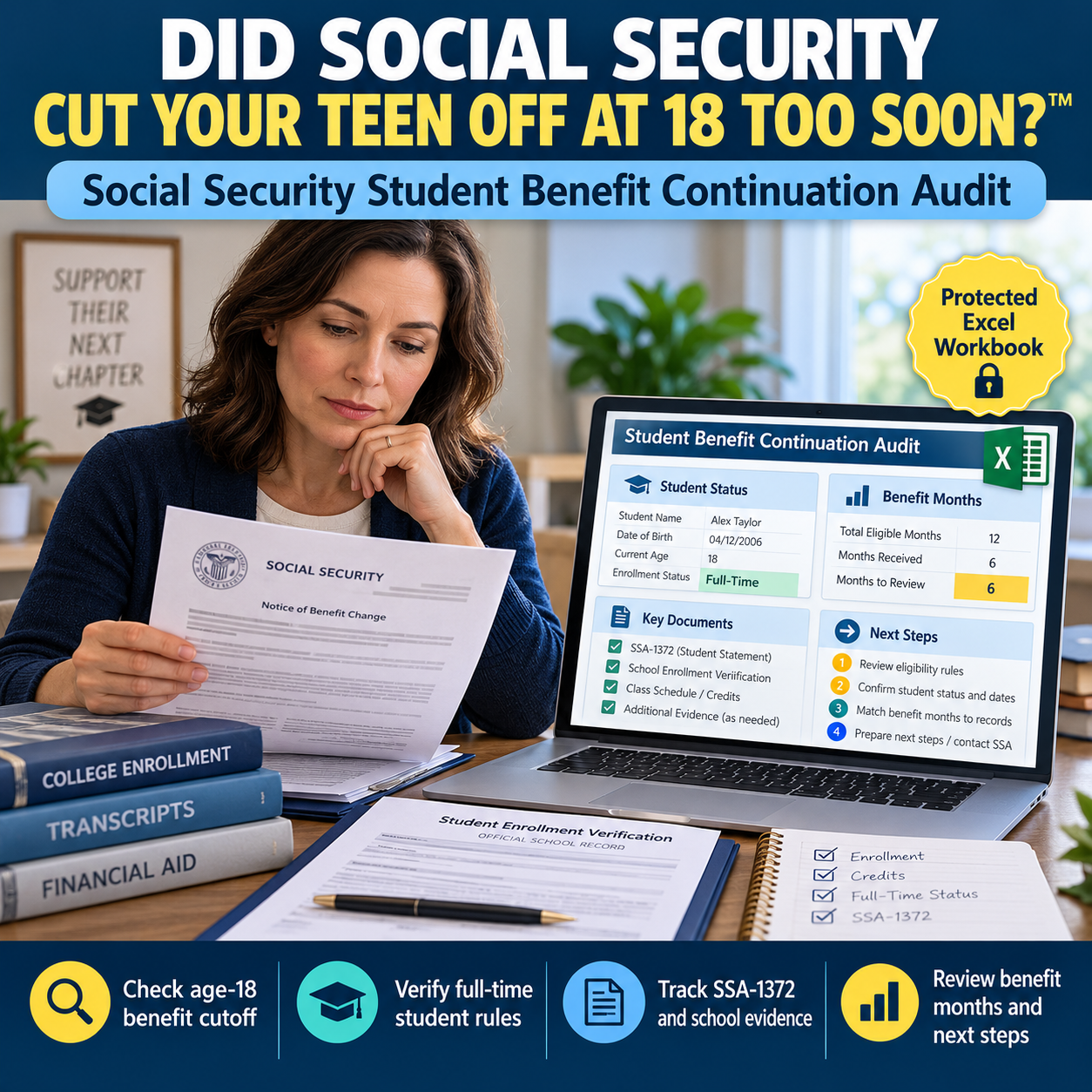
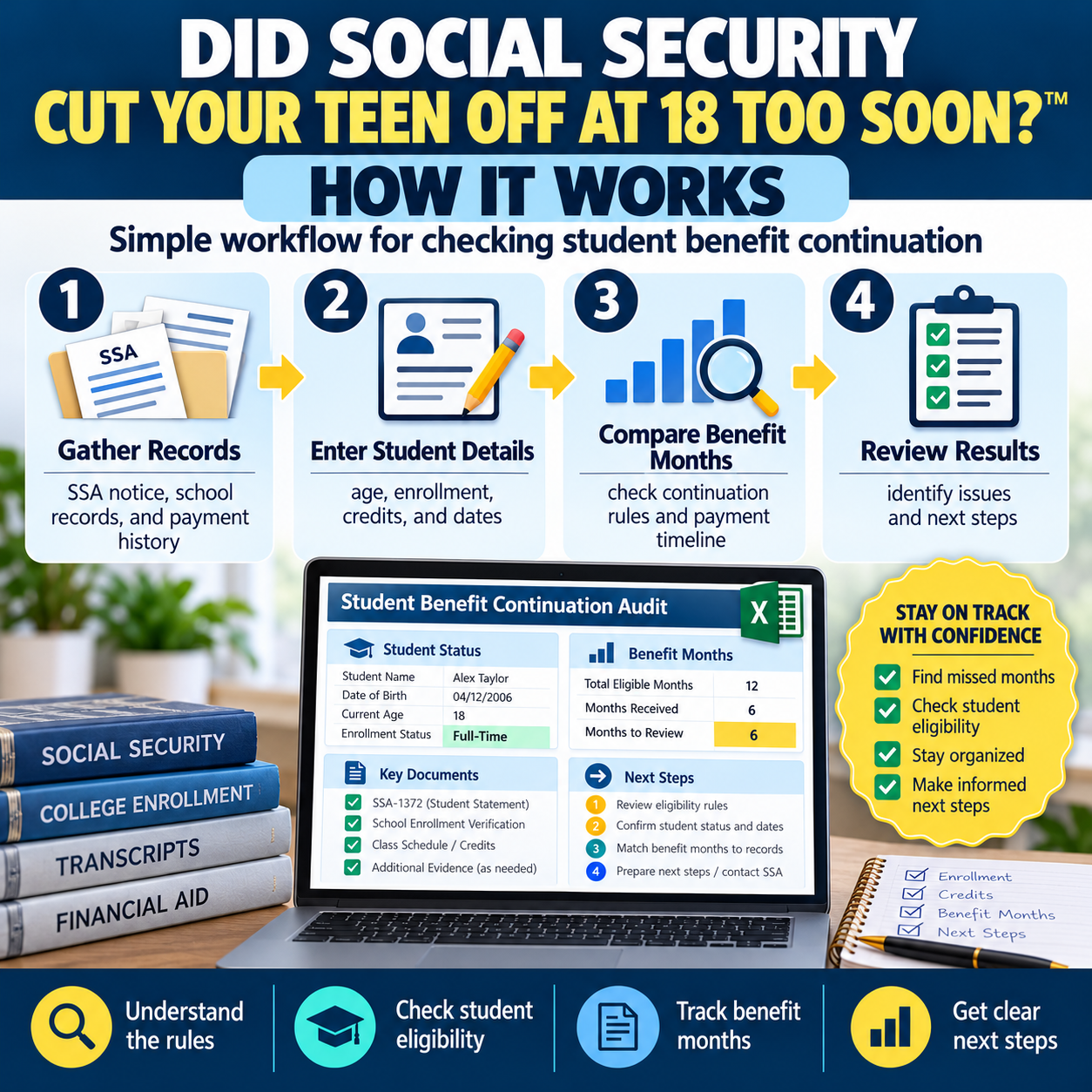

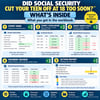
DID SOCIAL SECURITY CUT YOUR TEEN OFF AT 18 TOO SOON?™ — Social Security Student Benefit Continuation Audit
DID SOCIAL SECURITY CUT YOUR TEEN OFF AT 18 TOO SOON?™
Social Security Student Benefit Continuation Audit
Social Security child benefits do not necessarily have to stop simply because a student turns 18.
If your child was already receiving Social Security child benefits before age 18 and remained in qualifying full-time elementary or secondary school attendance, benefits may potentially have continued for additional months.
This workbook helps you reconstruct what happened.
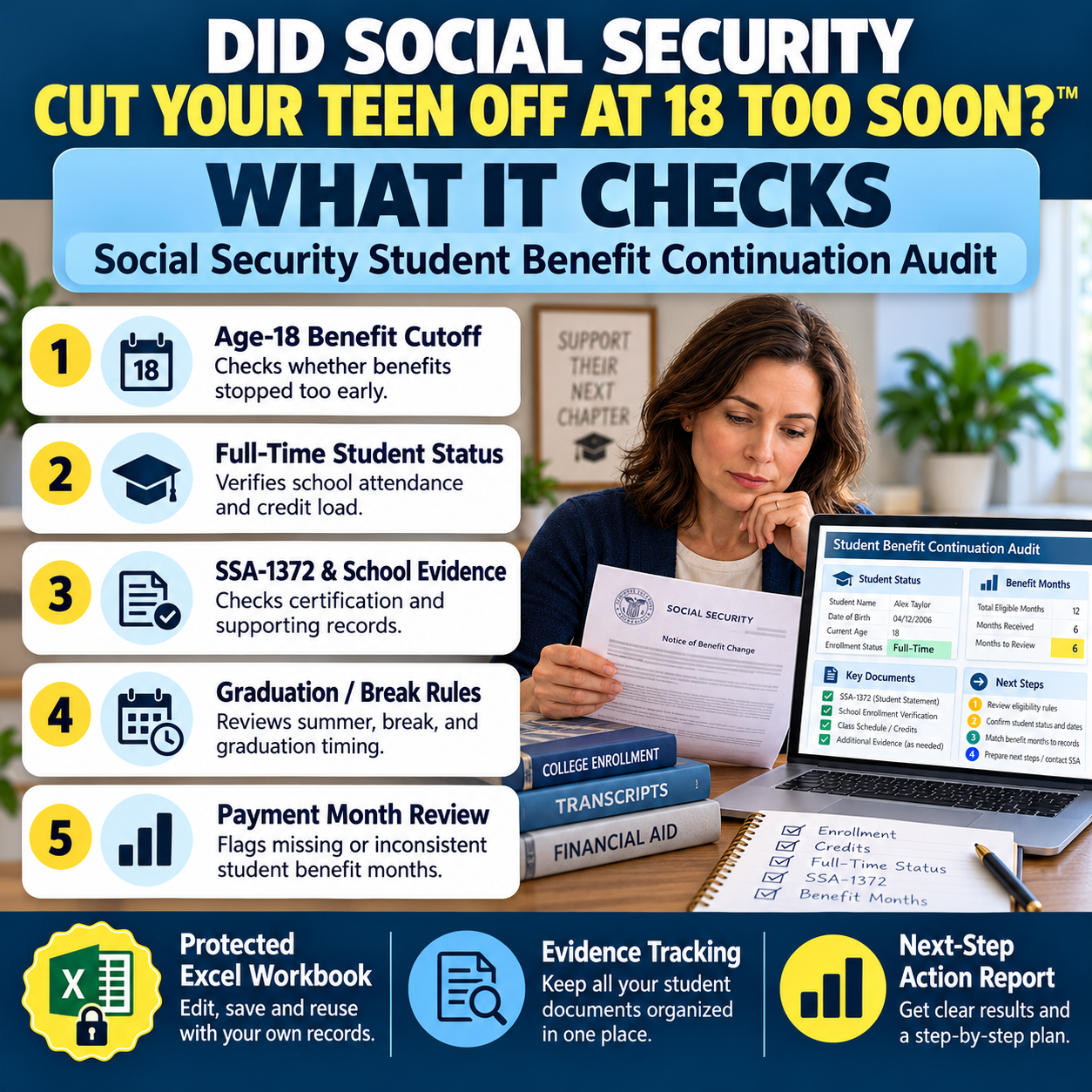
WHAT THIS AUDIT CHECKS
• The student’s 18th-birthday month
• Pre-age-18 Social Security child-benefit status
• School and program history
• Elementary/secondary-level status
• Full-time attendance
• Scheduled weekly attendance hours
• Course-duration requirements
• SSA-1372 school-attendance records
• Summer vacations and other school breaks
• Intent to return after a break
• Graduation and course-completion dates
• Age-19 continuation rules
• Semester, quarter and yearly-school rules
• Required re-enrollment
• SSA’s actual termination month
• The potential correct last entitlement month
• Possible missing student-benefit months
• Historical benefit-rate information
• Estimated gross benefits associated with flagged months
• Other withholding or payment factors requiring SSA review
BUILT FOR MONTH-BY-MONTH RECONCILIATION
The workbook does not simply ask whether the student was enrolled.
It reconstructs the record month by month from the age-18 period forward and compares the student’s documented school history with the Social Security entitlement record.
NORMAL SCHOOL BREAKS
Summer vacation or another temporary period of nonattendance does not automatically end student entitlement.
The workbook evaluates documented breaks, their duration, the student’s intent to return, the actual return date and whether age-19 rules affect the result.
AGE 19 IS HANDLED SEPARATELY
The workbook does not simply stop benefits on the 19th birthday.
It evaluates the school’s operating basis, school-year or term ending dates, re-enrollment requirements and whether the student was actually in qualifying full-time attendance during the age-19 month.
SPECIAL SCHOOL SITUATIONS
The workbook also identifies cases involving:
• Home school
• Online school
• GED programs
• Independent study
• Homebound students
• Correspondence courses
• Secondary-level programs operated through colleges or technical schools
Cases requiring additional SSA or school verification are clearly routed for review instead of being guessed.
POSSIBLE MISSING BENEFIT MONTHS
The audit compares:
SSA ACTUAL LAST ENTITLEMENT MONTH
with
CALCULATED POTENTIAL LAST STUDENT-ENTITLEMENT MONTH
Months falling between those dates can then be identified for further review.
BENEFIT AMOUNT RECONCILIATION
If reliable historical Social Security benefit amounts are available, the workbook can associate the correct documented monthly rate with each potentially missing month.
It does not calculate the worker’s PIA or independently recreate Social Security’s family-maximum calculation.
If earnings withholding, overpayment recovery, family-maximum changes or another payment issue may affect the amount, the workbook flags that month for SSA review rather than inventing an underpayment.
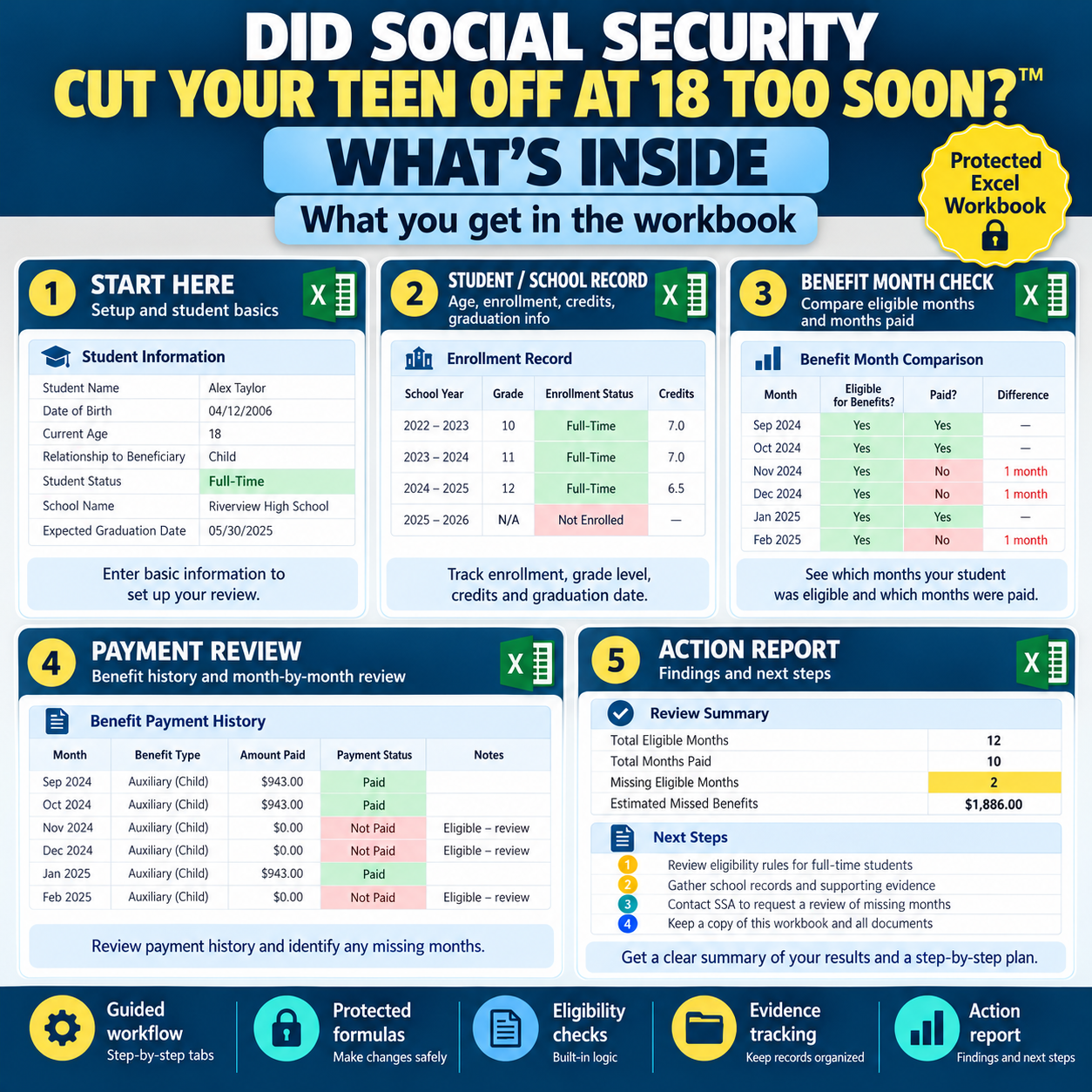
WHAT’S INCLUDED
• Start Here guide
• Benefit Record
• School History
• Attendance & Break History
• Month-by-Month Student Audit
• Termination Date Engine
• Benefit Rate History
• Payment Reconciliation
• Findings Dashboard
• Discrepancy Log
• Printable Action File
• Special Cases guide
THE ACTION FILE
The workbook creates a neutral review summary designed to help organize the dates, school records, SSA-1372 information, potential missing months and supporting documents you may want Social Security to review.
IMPORTANT
This is an independent record-reconciliation tool.
It does not make an official Social Security entitlement determination, provide legal advice, calculate every possible Title II payment adjustment, or guarantee that additional benefits are owed.
It is designed to help you organize the record, identify discrepancies and determine what questions and documentation may warrant review by Social Security.